- Home
- About Us
- Products
- Magnetic Machinery & Equipment
- Double Drum Type Magnetic Separator
- Over Band Magnetic Separator / Cross Belt Magnetic Separator (OBMS)
- Single & Double Roller Type Magnetic Separator
- Magnetic Separator / Drum Type Magnetic Separator
- Magnetic Destoner
- Magnetic Drum Separator
- Drum Type Magnetic Separator
- Magnetic Roller Separator - Roller Type Magntic Separator
- Inline Drum Magnetic Separator / Inline Magnetic Separator / Inline Separator
- Wet Drum Magnetic Separator / Wet Drum Permanent Magnetic Separator
- Belt Type Magnetic Separator / Belt Concentroter / Magnetic Concentroter
- Magnetic Sorting Belt
- Magnetic Pulley / Magnetic Head Pulley For Conveyor System / Magnetic Head Pulley / Permanent Magnetic Pulley
- Magnetic Drum
- Suspension Magnet / Suspended Magnet / Conveyor Magnet
- Magnetic Filter / Pipe Line Magnet / Filter Magnet / Trap Magnet
- Hopper Magnet
- Magnetic Grill / Grill Magnetic
- Plate Magnet / Magnetic Plate
- Magnetic Rod / Tube Magnet / Bar Magnet
- Drawer Magnet / Magnetic Drawer
- Channel Magnet
- Hand Magnet / Lifting Magnet
- Magnetic Floor Sweeper
- Rotary Magnet
- Magnet
- Vibro Separator / Vibro Magnetic Drum Separator
- T Magnet
- Magnetic Roll
- Vibratory Machinery & Equipment
- Belt Conveyor Parts
- Carrying Rollers
- Return Rollers
- Impact Rollers
- Guide Rollers
- Head Pulley
- Tail Pulley
- Snub Pulley
- Takeup Pulley
- Wing Pulley
- Carrying Idlers
- Return Idlers
- Impact Idlers
- Self Aligning Carrying Idlers
- Self Aligning Return Idlers
- PU/PVC Belts
- Rubber Belt
- Chevron Belt
- Belt Fasteners
- Belt Cleaner / Scrapers (Primary)
- Belt Cleaner / Scrapers (Secondary)
- Legging Sheets
- SMSR Gearbox
- Turn Buckles
- Eye Bolts
- Plummer Block / Bearing ETC
- Elevator Buckets - MS - PU - OTHER
- Magnetic Machinery & Equipment
- Updates
- Gallery
- Contact Us
Cross Belt Magnetic Separator Manufacturer In Tanzania
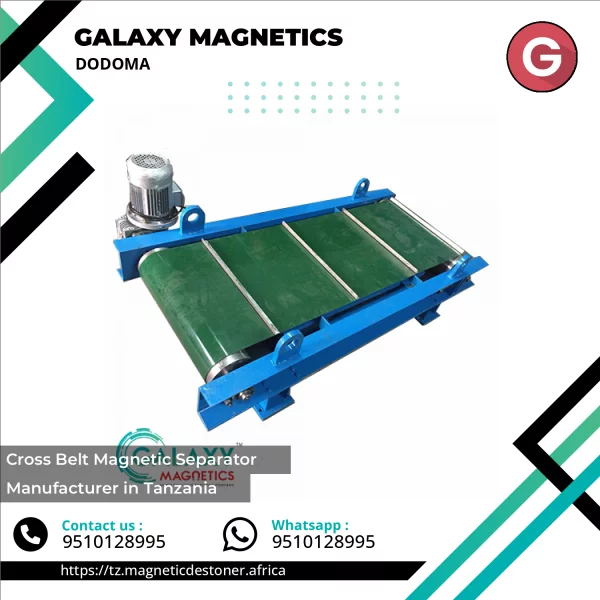
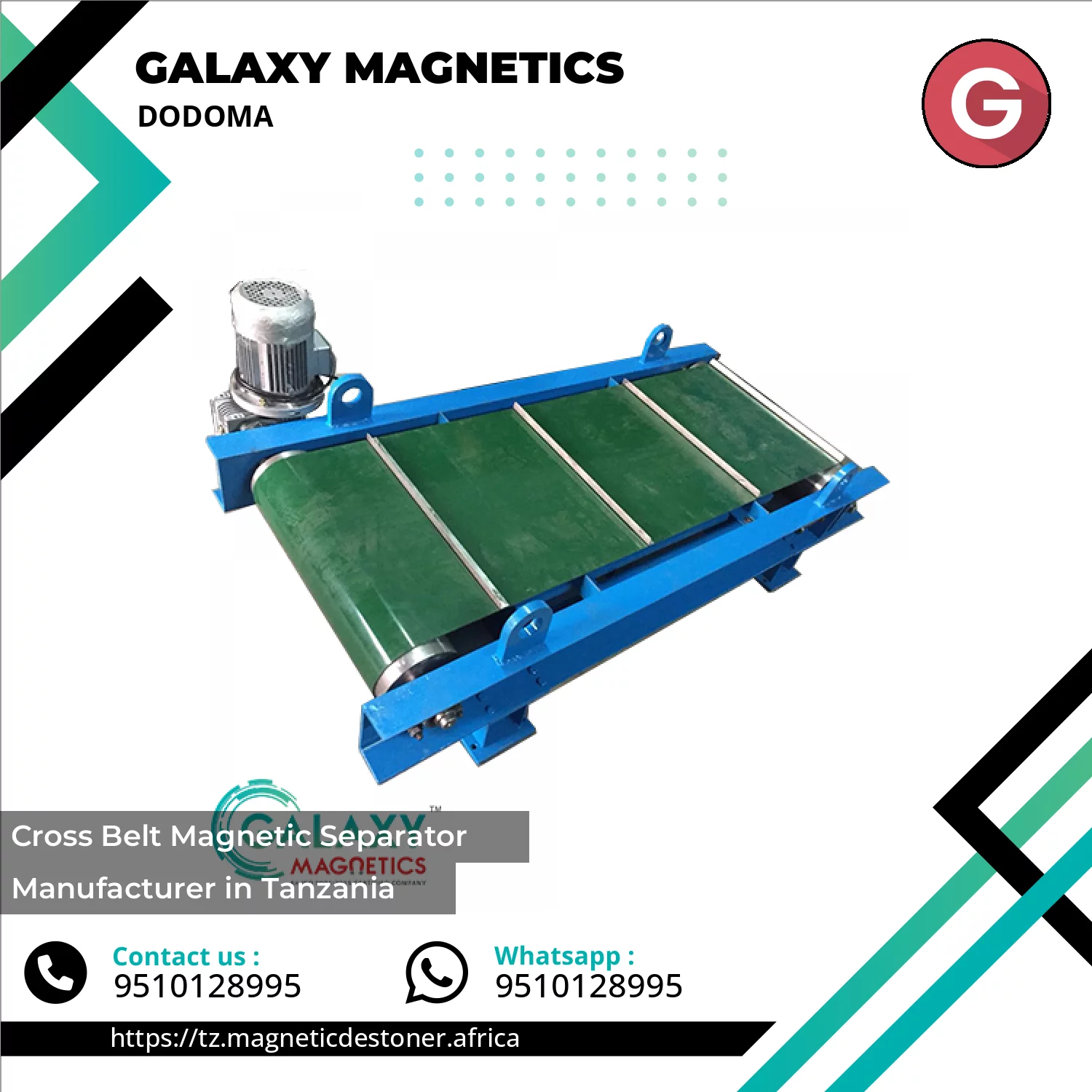
Details of Over Band Magnetic Separator / Cross Belt Magnetic Separator (OBMS)
Built to sort mixed ferrous bits fast, our Cross Belt Magnetic Separator works well in Tanzania’s varied industries. It handles a steady flow of raw materials and keeps machinery safe from metal scraps without much fuss. The design is simple but sturdy, built to last under tough conditions.
It pulls out metal pieces stuck in conveyor belts or loose in bulk loads, cutting down on damage risk and helping keep the product pure. In factories where grains, minerals, or recycled goods move along belts, this machine fits right in. Easy to set up next to existing lines, it helps reduce downtime and saves maintenance costs.
Adjusts To Your Needs
Ease Of Use: Simple controls let operators manage separation quickly without delays.
Material Flow Compatibility: Works smoothly with various belt types and widths common in industrial setups.
Tough Build Quality: Built with hard-wearing parts that resist wear from heavy or abrasive material loads.
Maintenance: Easily accessible components speed up cleaning and repairs on-site.
This equipment's strength lies in its flexibility across sectors like mining, food processing, and recycling—where metal contamination can slow production or cause costly breakdowns. By removing ferrous waste early on, it keeps lines running smooth longer (and not just for a few weeks). Its rugged frame deals well with harsh environments seen across many Tanzanian plants.
The magnetic pull adjusts based on the target metals and product type so you get cleaner output without extra manual sorting later. This reduces wasted labour hours—and you avoid frequent stoppages caused by unexpected metal bits jamming gear. Sometimes customers underestimate how much time those tiny steps add up to over months. We’ve noticed this pattern often enough that we focus on solutions that cut these small losses sharply rather than big promises about overall gains.
(It’s also worth noting the separator’s installation doesn’t need structural changes—a win when space is tight.) Overall uptime increases where it's used extensively; machines last longer since they don’t face constant strain from hidden metal pieces grinding into bearings or rollers.Offered Product